
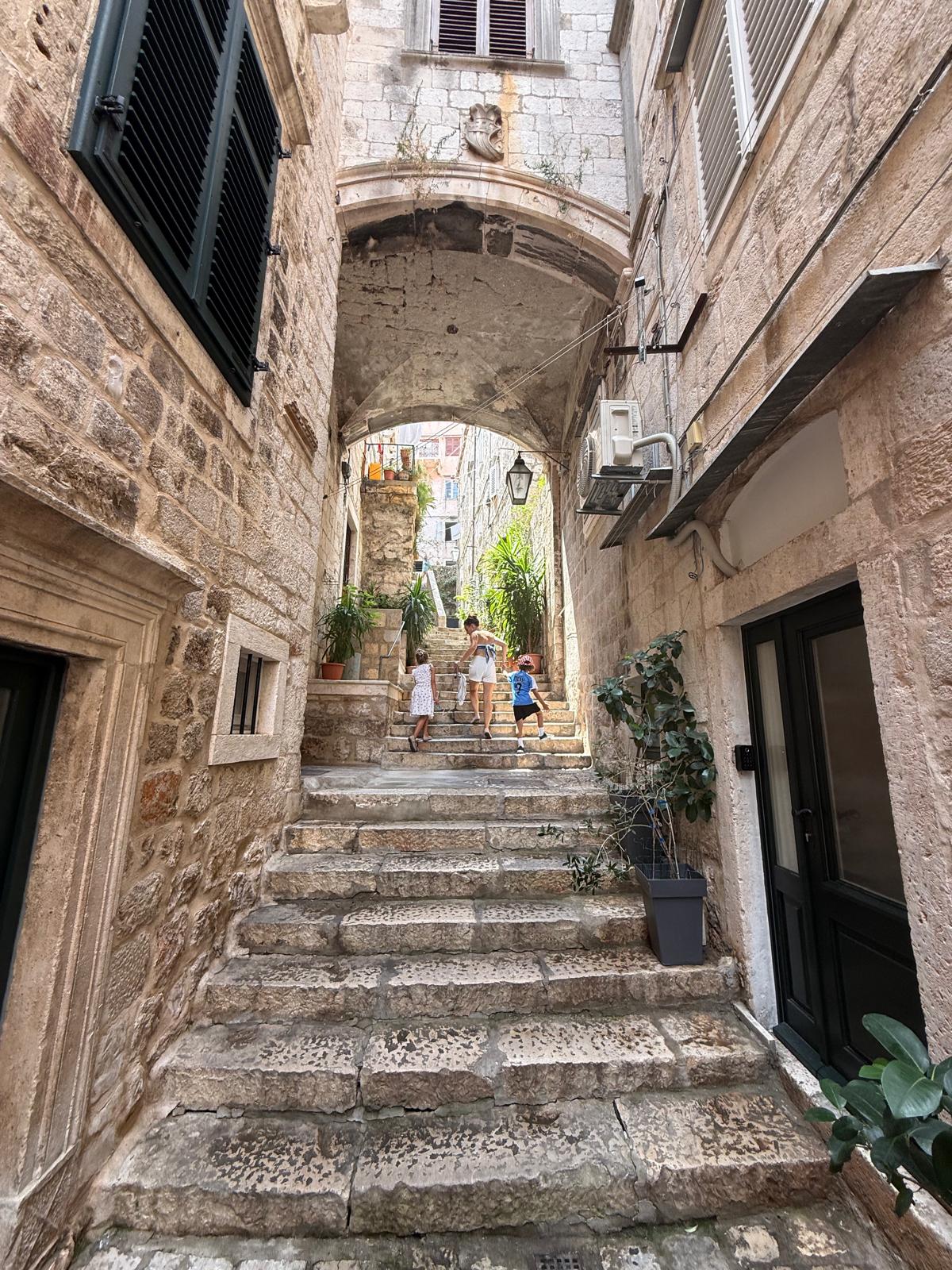
It’s eight weeks since Ben, Claire and the kids left the UK. To mark it, we’ve pulled together something a little different: practical, place-by-place notes on where we’ve actually stayed, what worked, what didn’t, and what we’d tell another family thinking about following a similar route through Spain, Albania, Montenegro and Croatia.
This isn’t meant to be a guidebook. There are plenty of those already, and Families Reimagined has never been about that. Instead, these are simply the notes we wish someone had handed us before we left, the sort of practical lessons you only learn by actually living somewhere for a while.
Spain: San Pedro de Alcántara
If you’re looking for a base on the Costa del Sol, we’d happily choose San Pedro de Alcántara again. We flew into Málaga, hired a car and drove around 45 minutes down the coast. It worked out slightly cheaper than staying closer to Marbella, but we lost nothing for it. We were close to the beach, had a beach gym we used regularly, and could walk all the way along the seafront to Puerto Banús and Marbella whenever we fancied a change of scenery.
The town itself was only a five to ten minute walk from where we stayed and felt genuinely family friendly, with parks in the centre where the kids could burn off some energy.
One of our favourite finds was Daisuke Sushi Fusion Restaurant, a Filipino restaurant that was well priced and somewhere we’d happily recommend. Right next door was an ice cream parlour, which our two managed to spot immediately!
A few other things worth knowing if you’re heading that way:
Markets: San Pedro has a Thursday market that’s relaxed and easy to wander around, while Marbella’s Saturday market is much busier. If you only have time for one, we’d choose San Pedro.
Bike hire: Ben hired a bike and trailer from Marbella Rent A Bike and took our son out for the day while Claire spent some one-to-one time with our daughter. We’ve found that occasionally splitting the children up for a few hours gives them both some individual attention, and it consistently works well for our family.
Benahavís River Walk: A flat 5 to 6km walk with very little climbing. We took a taxi to the start, walked the route, stopped at a supermarket near the finish, then took another taxi back. It was one of our favourite low-key days in Spain.
Marbella Old Town: Definitely worth an afternoon if you’re nearby.
Tarifa Beach: Further down the coast beyond Gibraltar. We’d heard it was one of the best beaches in the area and it didn’t disappoint. The drive there was beautiful too.
One thing we got wrong was only hiring a car for our first week. We thought we’d be fine without one, and for the most part we were. But when we looked at the cost of an Uber to Málaga train station for the next leg of our journey, we realised it was actually cheaper to catch the bus back to the station, hire another car for our final week, and return it before we left Spain. It also gave us the flexibility to visit friends further down the coast, so in the end it worked out better on every front.
We also used the Trainline app throughout Spain and found it worked just as well there as it does in the UK. Booking ahead generally gave us the best fares.
Albania: Sarandë and beyond
Our flight into Albania was only around two hours, but we landed in Tirana while staying near Sarandë in the south. That meant hiring a car and driving around three and a half to four hours to reach our accommodation.
Since arriving, we’ve learned that many people visiting the south actually fly into Corfu and take the ferry across, which is probably the easier option if Sarandë is your destination.
We stayed just outside the town itself, which is generally how we like to travel. Close enough to enjoy the busier areas, but with somewhere quieter to return to afterwards.
The beaches and water were one of the highlights of Albania. The sea really is as clear as people say. Sarandë and Ksamil can become busy, especially in summer, so we found ourselves enjoying the smaller beaches between the well-known spots just as much, if not more.
One thing to pack that we hadn’t really thought about was swim shoes. Every beach we visited was pebbled rather than sandy.
Sun loungers and umbrellas are generally linked to the hotel, restaurant or bar behind each beach and usually cost somewhere between €10 and €40 for two loungers, depending on the location. Free areas do exist but are much less common.
Albania is also very obviously a country that’s still developing. You’ll be standing somewhere genuinely beautiful, then turn a corner and find a derelict building or an area that hasn’t yet been restored.
It genuinely didn’t bother us. If anything, it reminded us that we’re visiting a country that’s still growing rather than somewhere polished purely for tourism. What has been restored is stunning, and everywhere we went people were warm, welcoming and eager to help, from restaurants to our hotel and the local contact who helped us buy our car.
We only scratched the surface, but we’d recommend Albania without hesitation. The beaches around Sarandë and the mountain scenery further inland felt like two completely different holidays, so it’s worth deciding what sort of trip you’re looking for before you arrive because travelling between the two can easily take four hours.
Montenegro: Sutomore, Kotor and the road north
Montenegro is where we finally learned the lesson that changed the rest of our trip.
Stop booking too far ahead.
We’d committed to a week in Sutomore before arriving, but after a couple of days realised it wasn’t quite right for us. It was busier and more built up than we’d expected, yet we’d already paid for the accommodation. From that point onwards we became much more flexible with our plans.
The upside was that Sutomore was very affordable. Eating out, ice creams and casual meals were all excellent value.
From there we explored further afield.
Budva’s Old Town is beautiful and easily worth a full day. We hired two sunbeds and an umbrella for €15, which felt excellent value.
We also visited the water park in Budva. Family tickets cost €50, but although ten slides were advertised, our children were only allowed on two or three because of their ages, something that wasn’t made clear beforehand. They still enjoyed the day, but knowing what we know now we probably wouldn’t go again.
One genuine hidden gem was Amnia in Bioče, around 15km outside Podgorica. It’s a riverside restaurant and bar with decking that leads straight into the river for swimming. Entry is free, you simply pay for food and drinks, and kayak hire was €5 each. It became one of our favourite afternoons in Montenegro.
We left Sutomore a day early and headed north towards Croatia. That drive turned out to be one of the highlights of the trip so far. The scenery became more dramatic the further north we travelled, especially around Kotor, although prices also increased as we headed towards the Croatian border.
Border crossings worth knowing about
Crossing from Albania into Montenegro was quick and straightforward.
Crossing into Croatia was very different.
We’d heard of people waiting as long as five hours to cross from Croatia into Montenegro. We crossed early, around 8am, and were through in roughly 30 minutes. If you have any flexibility, we’d strongly recommend travelling early before queues begin building.
At the border we needed passports for all four of us, including the children, who had to get out of the car so officials could see them. We also needed the car’s registration documents and Green Card insurance.
There was an additional charge of around £15, which we believe related to insurance. We’d recommend carrying some cash just in case, as cards weren’t accepted.
Croatia: Cavtat and Dubrovnik
Croatia felt slightly different because Claire’s parents flew out to spend the first week with us. Naturally that changed our budgeting, with meals sometimes on us and sometimes on them.
We stayed in Cavtat and would happily recommend it. It has plenty of hotels, restaurants and bars, beautiful surroundings and lovely water. Overall, prices felt fairly similar to Spain.
After Claire’s parents flew home, we moved to Rozat, just outside Dubrovnik, where we caught a fifteen minute bus into the city for €5 for all four of us.
Dubrovnik itself sits in a different price bracket. Once food, drinks and sightseeing were added together, we spent close to €200 in a single day. It’s absolutely worth visiting, but we’d budget for it separately rather than assuming prices are similar to the rest of Croatia.
That brings us to the end of Croatia, and to the end of this first eight weeks on the road.
We’ve now crossed into Bosnia, which we’ll write about once we’ve had the chance to properly experience it. After that, we’re hoping to continue through Serbia, Hungary, Austria, Switzerland and Slovakia.
Eight weeks ago these places were simply names on a map. Now they’re favourite restaurants, roads we’d happily drive again, beaches we’d return to, unexpected friendships and lessons we’ll carry into every country still to come.
What else is possible, when the best days of the trip so far have come from the places we almost didn’t stop in?
Related reading:
- The Stranger Who Helped Us Buy a Car in Albania
- Cost of Living: Spain, Albania, Montenegro, Croatia
- Why We Stopped Planning Ahead
Frequently asked questions
Do you need a car to get around Spain’s Costa del Sol area?
It helps, but it’s not essential. We used a mix of car hire, trains and taxis depending on the leg, and found the balance that worked for us by simply adjusting as we went rather than fixing it in advance.
Are Albania’s beaches free to use?
Most sun loungers and umbrellas are tied to a nearby hotel, restaurant or bar and come with a fee, typically €10 to €40 depending on the beach. Free, unattached areas exist but are less common.
How long does the Montenegro to Croatia border crossing take?
It seems to vary enormously by time of day. We crossed early morning and were through in about thirty minutes, but heard of queues up to 5 hours long!
Is Dubrovnik worth the extra cost compared to the rest of Croatia?
We think so for at least a day or two, but it’s genuinely more expensive than everywhere else on this leg of the trip, so it’s worth treating as a separate budget line rather than assuming it matches the rest of the country.


Leave a Reply