

Three months into full-time family travel, Claire draws on her own background as an advanced occupational therapist specialising in mental health to explain how the four of them look after their wellbeing, not just their fitness, while spending almost every hour together.
We’ve written before about staying active on the road. This one is about everything else, the quieter, less visible side of looking after yourself when you’re together as a family twenty-four hours a day, seven days a week.
The challenge of never really being apart
Being together constantly comes with its own pressures, for the adults and the children alike. Having a bit of time to yourself matters, and we’re still figuring out what that looks like as we go. It depends a lot on where we’re staying and whether the accommodation even allows for it.
When we’re only somewhere for two or three days, we tend to want to be together as much as possible, we’re seeing the sights, moving through things quickly, and there simply isn’t much natural downtime built in. In those stretches, we lean into doing everything as a four.
Where longer stays give us breathing room
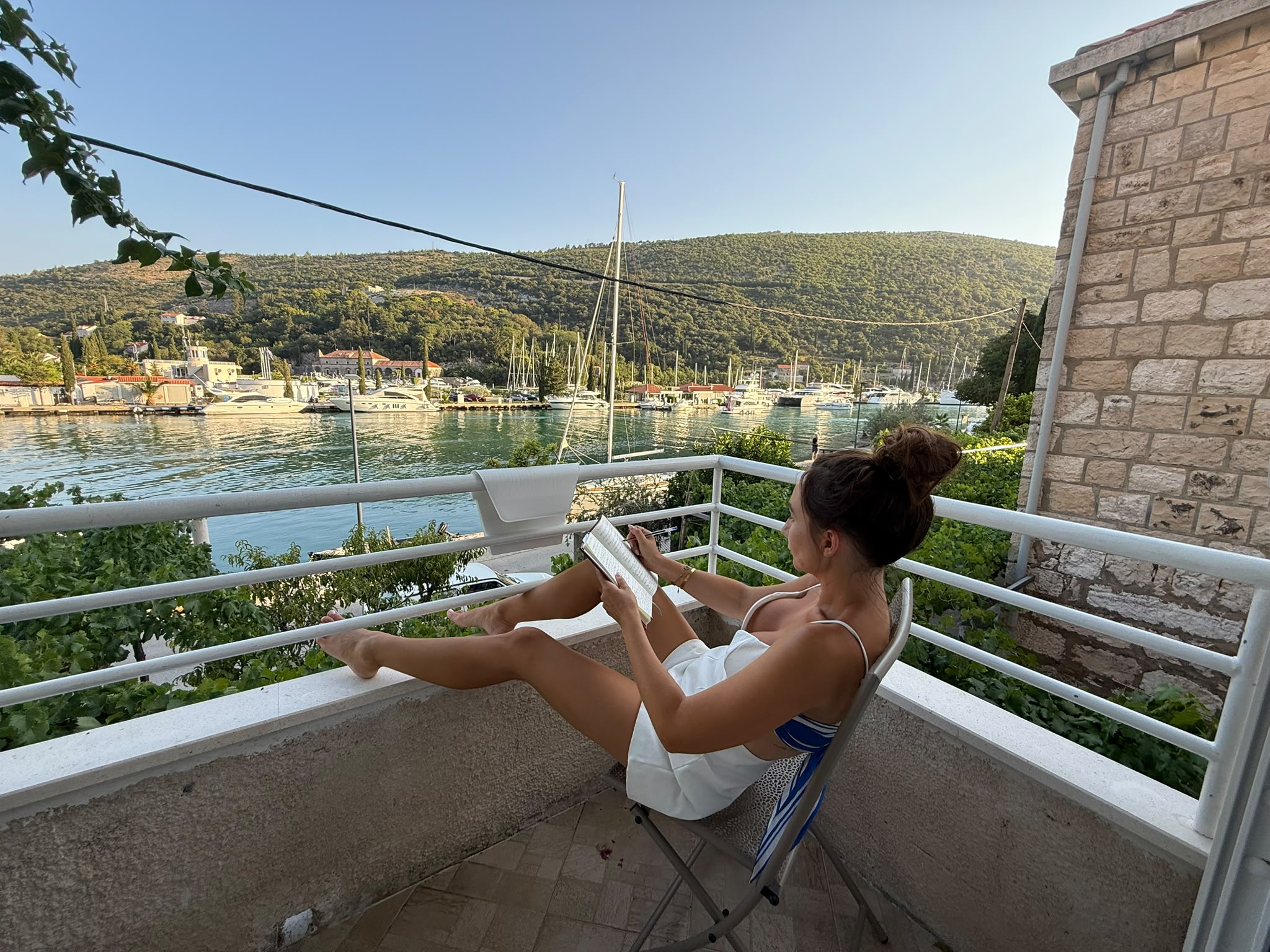
It’s when we have longer stints somewhere that real space opens up. That might mean Claire heading out for exercise or a walk, getting her nails done, or Ben popping out for a coffee, clearing his head, or spending an hour on the phone with a friend. Sometimes it’s simply doing nothing at all.
In accommodation with multiple rooms, that often looks like all four of us in completely different corners of the same place, Claire on the bed watching something on Netflix, the kids in the living room with a film, Ben in the kitchen on his laptop. Even the children do this when they can, our son will sometimes go off on his own bed with an activity while our daughter sits watching a programme in the living room. Knowing when that space is available, and actually taking it, makes a real difference to everyone’s mental health and wellbeing. Nobody has to be entertaining everybody else all the time.
What’s struck us most is how little time it actually takes. Even an hour apart, and we’re all ready to be back in each other’s company again. It’s not about needing a lot of space, just enough that, for a short while, the only thing you’re focused on is yourself and whatever you want to do in that moment.
The professional side of how I manage this
I can be someone who gets quite heightened, hypersensitive to certain things, hypervigilant at times, and I need that space to self-soothe and reset my nervous system. As an advanced occupational therapist specialising in mental health, a lot of what I’d normally teach clients has quietly become part of how we live day to day as a family.
I use specific breathing techniques regularly to help reset. When the children are heightened, overtired or agitated, I look for calming, regulating activities rather than pushing through, sometimes that’s distraction, gently moving their attention away from whatever’s upsetting them and onto something else entirely.
One thing we’ve started building into our travelling more deliberately is a simple sensory mindfulness exercise. We’ll ask the children to name five things they can hear, five things they can smell, five things they can see. It sounds small, but it makes them actually think about and reflect on what they’re doing in that moment, rather than moving through an experience passively. It turns a walk or a new place into something they’re really present for, not just something happening around them.
Sleep, and protecting it well
Good sleep hygiene matters enormously to us, and it isn’t always easy to maintain on the road. A dark room, minimal light, quiet, that’s what supports a truly restful night, and when we’re all sharing one room, that can get disrupted, someone waking someone else, more noise than usual. The children have a nightlight and like their lullabies playing at bedtime, which we try to protect wherever we can.
We try to keep a consistent bedtime most of the time, with real wind-down before it, no devices in the evening, we’re firm on that one. A cool room matters too, some of our stays haven’t had air conditioning, and that’s had a real, noticeable effect on how well everyone sleeps. All of it feeds into the same thing: supporting mental health and wellbeing through something as basic as a decent night’s sleep.
Lifestyle balance
We’re eating more treats than we would at home, that’s just part of this life, so we make sure we keep up our exercise to balance that out. Staying hydrated matters more than it might at home too, we’re constantly in hot weather, and it’s an easy thing to let slip without noticing.
The smaller things that add up
A few other things have quietly become part of how we look after ourselves. We each keep a personal journal, and our daughter writes in hers often too, it’s become a genuine outlet for processing what we’re going through, not just a record of where we’ve been. Small comforts from home matter more than we expected too, for me that’s something as simple as a dressing gown, a familiar, sensory bit of self-soothing that travels with us even when almost nothing else from home does.
We’re also careful about keeping work time boundaried. Ben and I coordinate when we’re each online so it doesn’t bleed into family time, and the kids have called us out more than once for being on our phones when we shouldn’t be, we’ve learned to actually listen when that happens and put them down.
One thing we’re conscious of, and still working on, is checking in with each other well. We try to notice when the other one might be struggling, but noticing isn’t the same as actually asking, and that’s the bit we’ve recognised we need to get better at, building in proper, regular check-ins rather than relying on picking up on signs after the fact. As the one who tends to carry more of the day-to-day logistics and planning, I’ve noticed that mental load is its own kind of weight, one that doesn’t always show on the surface the way tiredness or a heightened moment does, and it’s something I’m learning to name out loud rather than just carry quietly.
We’re also still working out what specifically helps each of us, what settles Ben isn’t necessarily what settles me, and what works for one child doesn’t always work for the other. That’s an ongoing thing rather than something we’ve fully figured out, and it’s one of the areas we know we’ll keep getting better at the longer this journey goes on.
What else is possible when looking after each other means making space to look after yourself too?
FAQ
How do you get alone time when you’re travelling as a family of four? It depends heavily on how long we’re staying somewhere and whether the accommodation allows it. Longer stays and multi-room stays make it far easier than a quick two or three day stop.
What techniques help manage overwhelm while travelling with children? Breathing techniques for regulating yourself, calming or distracting activities for children who are overtired or heightened, and simple sensory mindfulness exercises, like naming things you can see, hear and smell, all help in the moment.
Is it hard to maintain good sleep habits while travelling? Genuinely, yes, especially when the whole family shares one room. We do what we can, keeping a consistent bedtime, limiting devices in the evening, and prioritising a dark, cool, quiet room wherever possible.
Related reading:
Leave a Reply