
After cutting their Tunisia stay short, Ben and Claire had a decision to make: how do you actually get a family of four, and a car, back to England? Here’s the route they pieced together, working backwards from a ferry booking, all the way home.
The first real decision was how to get back at all. We looked at the Eurostar and Eurotunnel, both solid options for getting across to London by train, before settling on a ferry instead, P&O from Rotterdam to Hull. Once we’d picked that route home and a date to be on board, we worked backwards from there to map out everything in between.
Cuneo: settling back down after Tunisia
Having left Tunisia early, we flew into Marseille and started heading back up towards Italy, since that gave us the direction we needed. We chose Cuneo, a quieter, less touristy town than the usual Italian hotspots, with hiking trails, mountain scenery, and a real town feel. Three nights in a fully self-catering apartment gave us exactly what we needed after Tunisia: control over our own food, our own shop, our own pace, and some real downtime to feel settled again. We got out for a few walks into the surrounding hills, and one evening took the kids bowling, a small, ordinary thing that felt like exactly the reset we needed.
A gifted stay at Lake Orta
From Cuneo we were kindly gifted a stay at a property in Lake Orta, further north in Italy (check it out here, beautiful spot and highly recommended ). Two nights in a beautiful, traditional three-storey townhouse in a tiny lakeside village, streets so narrow that Ben picked up a few scratches on the Audi getting the car through them, which became a running joke by the end.
Lake Orta itself was a real find, far less touristy than some of Italy’s better-known lakes, with a genuine sense of local life rather than feeling overrun. Plenty of walks and hikes back into the mountains if you wanted them, all centred around the lake itself, with bars and restaurants dotted around. One thing that caught us off guard: mealtimes. We’d normally head out mid-afternoon, but most places only served food from 12 to 2pm, then again from 7pm onwards, worth knowing if you’re used to a more flexible schedule.
Engelberg, Switzerland: a firm favourite, cut short by price
From Lake Orta we headed to Engelberg in Switzerland, and this became one of our favourite stops in the whole of Europe. Stunning mountain scenery, lots of greenery, and a real communal feel to the town, cafes, restaurants, shops, everything within easy reach.
We only stayed two nights, purely down to cost. Switzerland was seriously expensive for food and drink, even fast food takeaway-style meals came to around €70 for the four of us. Our hotel included bed and breakfast, with a lovely nearby park and an indoor pool the kids loved, but we really wished we’d planned more time in Switzerland and budgeted for it in advance.
One thing we’ll do differently next time: we’d hoped to ride the Glacier Express or the Bernina Express, Switzerland’s famous panoramic trains with the big windows built for scenery. Because we were booking everything last minute, both were fully booked, the only reservations left would have had us leaving at 7pm and arriving in the dark, missing the entire point of the ride. A clear case of spontaneity costing us something we’d have loved to do. We’d love to come back to Switzerland with more time on our side, ideally in winter too.
Strasbourg: a cheap, sociable campsite and a walk into history
Next was Strasbourg, where we booked a two-bedroom chalet cabin at a campsite, less than £200 for two nights. Self-contained with a kitchen and fridge, so we picked up bits for ourselves and ate out for main meals. What made this stop special for the children was the sheer amount to do, a park, a pool, various games, bikes to hire, and crucially, other kids to play with. They made friends almost immediately and were out playing for hours both evenings, exactly the kind of sociable reset that a campsite environment gives kids that a hotel rarely can.
We also walked into La Petite France, about 30 minutes from the campsite, both days we were there. The walk itself took us through some rougher-feeling areas before reaching the district itself, worth being aware of if you’re walking rather than driving. Once there, though, it’s a truly beautiful, quaint, historic quarter built up from the 16th and 17th centuries around the tanners, millers and fishermen who once worked there, half-timbered houses with sloping rooftops and open lofts originally used for drying hides. It’s part of a UNESCO World Heritage site, and it shows, cobbled streets, canals, and real character at every turn.
It’s touristy and busy, and the restaurants and bars right along the river reflect that in their prices. We found much better value walking a little further out, onto the streets leading off the main centre, where the food was noticeably more reasonable.
One more thing worth flagging for anyone driving through this stretch: the motorway tolls between France and Italy stung us again, anywhere from €3 to €20 depending on where we stopped, on top of everything else.
The long drive to Rotterdam
With only one night left before we needed to be in Rotterdam, we committed to a long day, six to seven hours of driving, with just a couple of stops for the toilet, food and drinks. Same approach as always for a big driving day: plenty of activities for the kids, devices fully charged before we left.
We arrived in Rotterdam in time for an evening meal at our hotel, which included breakfast, and the kids got to burn off some energy in the children’s play area before bed. The next day we paid an extra €15 for a late checkout, worth it given the ferry terminal was still an hour’s drive away, and spent the morning working, walking, and letting the kids play before heading off.
The ferry crossing home
Check-in opened at 3pm, and by the time we arrived at around 3:20, the queue had already started. All told, from arriving to actually boarding took just under two hours, passport control, car documents, the usual checks.
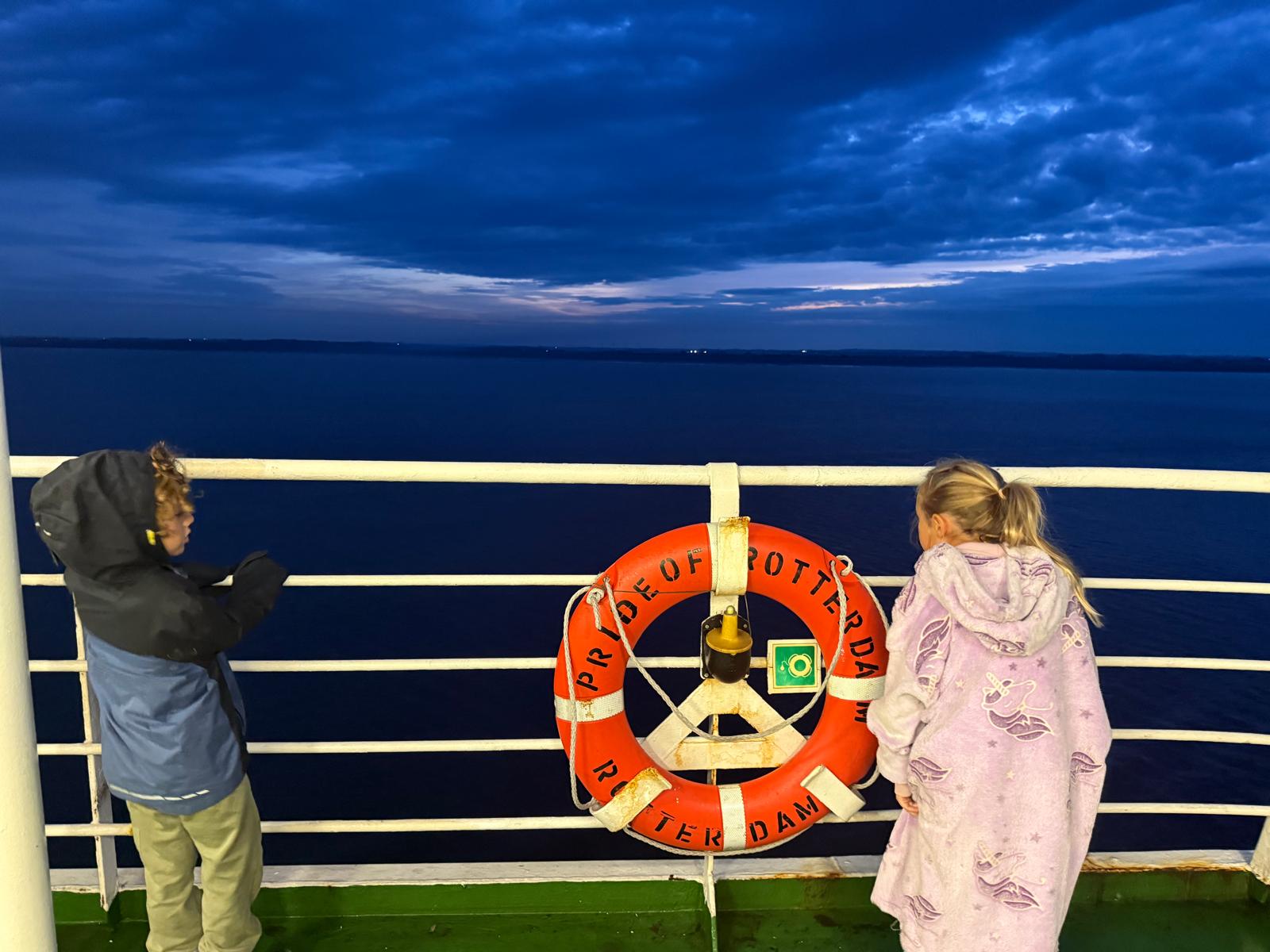
I’ll admit I’d been dreading the ferry beforehand, but I really enjoyed it. Our cabin was tiny, two bunk beds side by side and a small ensuite, but once we’d dropped our bags we went exploring. We were on board by around 5pm, grabbed some food, then discovered a small cinema showing the new Moana at 7pm. A family ticket for the four of us, popcorn and drinks included, came to just £30, with a free pass for the games area and shuffleboard afterwards thrown in too. We watched the film, played some games, had a good explore of the ship, and ended up back in our cabin around 10:30-11pm, far too wired for an early night after a day like that.
The kids slept brilliantly. I didn’t, though by now everyone who knows me expects that. We’d set an alarm for 6:30am specifically to catch the moment the ferry passes the Humber, close enough to see Sunk Island from where we live. In the rush, we didn’t account for the clocks changing overnight, so we actually left the cabin at 5:30am, an hour earlier than planned. Nobody minded. Everyone was buzzing to be home. We docked around 8am and drove straight to my mum and dad’s.
What it cost us
Switzerland was our priciest stretch by some distance, food and drink alone running close to €70 for a simple takeaway meal for four. Strasbourg’s campsite chalet, by contrast, came in under £200 for two nights. Motorway tolls between France and Italy added another €3-20 depending on the stretch, and the ferry crossing itself, cabin, food, cinema and games included, felt like real good value for what it gave us.
What else is possible when the journey home becomes one of the best parts of the trip?
FAQ
Is the P&O ferry from Rotterdam to Hull worth it with children? Very much so. Between the cinema, games area, and a real cabin to sleep in, it made for a genuinely enjoyable end to the trip rather than just a logistical necessity.
Is Switzerland worth visiting on a budget? It’s possible, but food and drink costs caught us out repeatedly. Budgeting in advance, and booking any scenic train rides well ahead of time, would make a real difference.
Is it worth booking panoramic train tickets like the Glacier Express in advance? Yes, based on our experience. Booking last-minute meant missing out entirely, with only unsuitable evening slots left.
Related reading:
Leave a Reply