
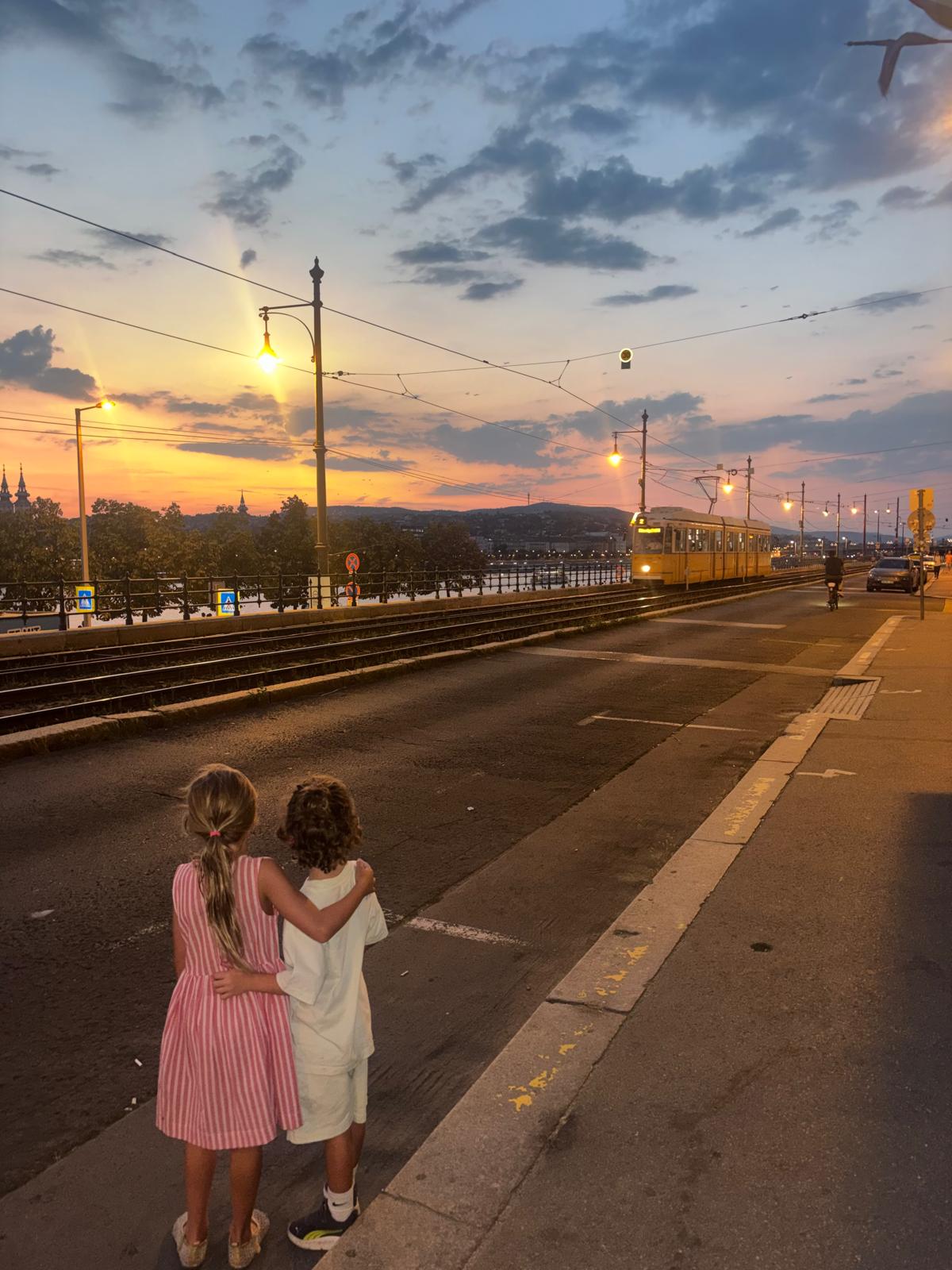
Fifteen countries in, Ben and Claire step back from the logistics and the lessons to reflect on something they didn’t fully anticipate when they left: just how much their children have grown along the way.
We didn’t set out to teach our children anything specific. There was no curriculum in mind beyond the odd bit of reading and maths squeezed in between activities. But fifteen countries in, we keep noticing the same thing: this trip has given them something we couldn’t have planned for, and couldn’t have given them any other way.
Confidence that wasn’t there before
Our children order their own food now. They ask strangers for directions, for the bathroom, for help finding something. Sometimes they do it in the local language, picked up from nothing more than being surrounded by it. None of this was something we drilled into them. It’s simply what happens when a five and seven year old are placed, again and again, in situations where the easiest thing is to speak up for themselves.
At home, we’d have done most of that talking for them. Out here, there isn’t always someone else to do it, and they’ve risen to that far more naturally than we expected.
A different kind of friendship
Some of the most striking moments of this trip have been watching our children play with kids who don’t share a single word of English with them. A campsite in Strasbourg, a resort in Slovakia, an animation team’s evening activities in half a dozen countries, and every time, language simply hasn’t mattered. They’ve worked it out through play, through pointing, through the universal logic of a football or a game of tag.
These friendships rarely last more than a day or two. That’s never seemed to matter to them. They throw themselves in fully, enjoy it completely, and move on without the loss feeling as heavy as we might expect it to. If anything, it’s taught them that connection doesn’t need much to get started.
Picking up language without trying
Our daughter in particular has taken real pride in this, coming back from an outing able to reel off a handful of words in whatever language surrounds us that week. Spanish, French, German, Polish, fragments of each have stuck simply through repeated, everyday exposure rather than any formal lesson. It’s not fluency, but it’s a comfort with the sound and shape of other languages that we don’t think would have come nearly as naturally sat in a classroom at home.
Learning to be the new kid, over and over
There’s a particular kind of resilience that comes from being the unfamiliar one in a new place, again and again, every few days for months. Our children have had to learn how to walk into a new setting, a new group of children, a new set of adults, and find their footing quickly. We’ve watched that get easier for them with practice, not because the newness stopped feeling new, but because they’ve built real trust in their own ability to handle it.
What we didn’t expect
If you’d asked us before we left what we hoped our children would get from this trip, we’d probably have said something vague about seeing the world, about memories, about time together as a family. All of that has been true. But we didn’t fully anticipate the more specific growth: the confidence, the ease with strangers, the language, the resilience of being new somewhere so often it’s stopped being frightening.
We think a lot about what they’ll carry forward from this once we’re back to a more settled life. Our honest hope is that it’s exactly this: the belief that they can walk into an unfamiliar situation and find their way through it, wherever in the world that situation happens to be.
What else is possible when the biggest lessons your children learn are the ones you never planned to teach?
FAQ
Do you worry your children are missing out on a more traditional education while travelling? We stay conscious of it and keep up reading, writing and maths where we can, but we’ve also come to believe that confidence, adaptability and real-world problem-solving are their own kind of education, one that’s harder to replicate in a classroom.
How do your children cope with constantly making and losing friends? Better than we expected. The friendships tend to be short but genuinely enjoyed, and they move on from each one without it weighing on them the way it might for an adult.
Has language-learning been a deliberate part of your travels? Not formally, no. What they’ve picked up has come from everyday exposure rather than lessons, though we do make a habit of learning a few key phrases together in each new country.
Related reading:
Leave a Reply